The Hook: If you feel like you are drowning in passwords, you are not alone. In 2025, the average internet user managed over 100 different login credentials, yet security breaches hit an all-time high. A recent industry report estimated that identity fraud cost the global economy over $23 billion in 2025 alone, with digital document forgeries rising by 244%. The hard truth is that the “username and password” model is broken. The solution isn’t a stronger password; it is a completely new way to prove who you are.
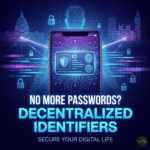
Define It Simply (The “Digital Passport” Analogy): Think of a Decentralized Identifier (DID) like a digital passport that lives securely on your smartphone.
The Difference: unlike a physical passport issued by the government, or a login profile owned by Google, you own this ID.
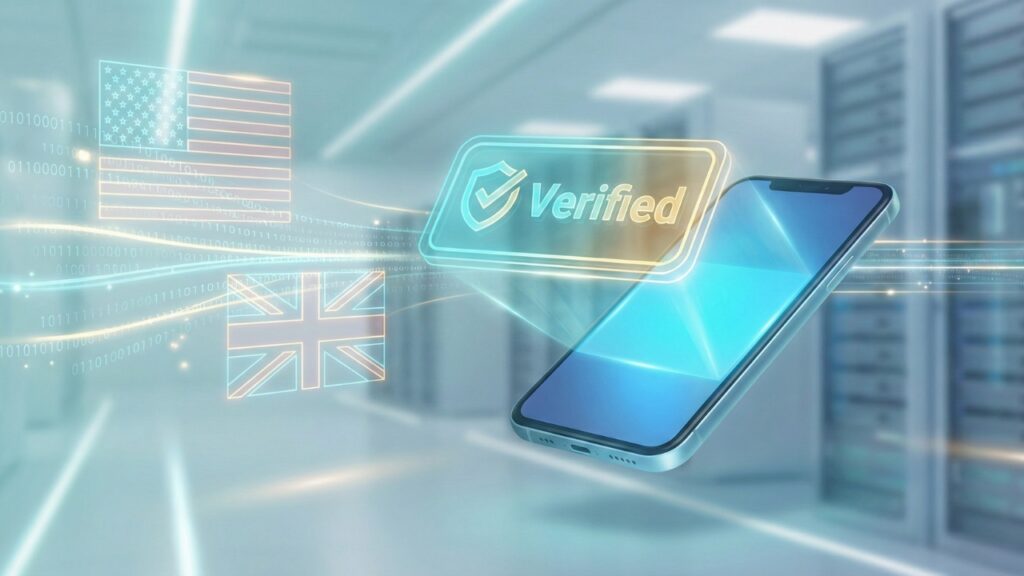
The Power: You can show it to a bank, a hotel, or a website to prove who you are, without ever handing over your actual data or filling out a form. It’s like showing a bouncer your ID to get into a club, but the bouncer never sees your address or license number—they just see a green “Verified” checkmark.
Why It’s Trending Now (2025-2026 Data):
🇬🇧 UK Update: The UK Digital Identity and Attributes Trust Framework officially came into full force in December 2025. This law allows British citizens to use certified digital IDs for everything from renting a flat to starting a new job, replacing physical paperwork.
🇺🇸 US Update: The trend is exploding in the US, led by state pilots. California and Utah have successfully rolled out Mobile Driver’s Licenses (mDLs) that utilize decentralized technology. These are now accepted at major TSA airport checkpoints, proving that digital-first travel is here.
🇪🇺 EU Push: The mandate is moving into its final enforcement phase. By late 2026, every EU member state must offer a digital wallet to its citizens, forcing global companies (including US and UK tech giants) to upgrade their systems to accept DIDs.
What is a Decentralized Identifier (DID)? (Easy English Explanation)
To understand why DIDs are revolutionary, we have to look at how the internet handles your identity today versus how it will work tomorrow.
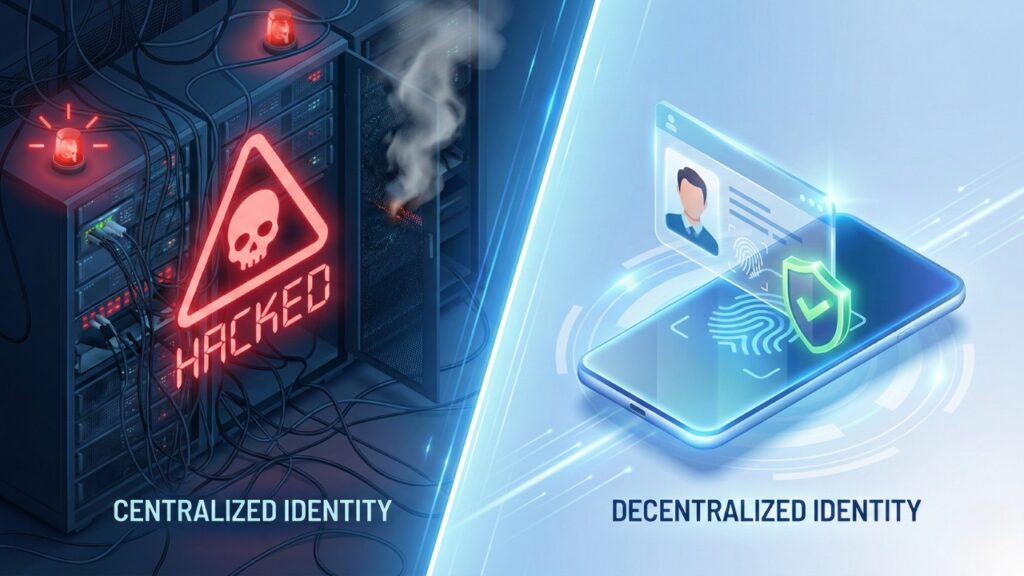
The Old Way: Centralized Identity
Currently, your digital life is “rented.” Your identity lives on servers owned by Facebook, Google, or your bank.
The Risk: This creates a “Honey Pot.” Hackers love these central databases because if they break into one, they steal millions of IDs at once.
The Problem: You are not the controller; the company is. If they lock your account, you lose your digital existence on that platform.
The New Way: Decentralized Identity (DID)
A Decentralized Identifier flips the model upside down. It moves the power from the company to the user.
You are the “Controller”: You create your own encrypted ID on a secure network (often a blockchain or distributed ledger). No single company can delete it or take it away from you.
No Central Database: Because every user holds their own keys in their digital wallet, there is no massive database for hackers to target.
Verifiable Credentials (VCs): This is the magic behind DIDs. Think of these as “digital stamps” in your passport.
Example: A university does not need to call your employer to prove you have a degree. They issue a “Verifiable Credential” (a digital stamp) to your phone. You simply share that stamp with your employer. It is instant, unforgeable, and verified by cryptography.
Why the US and UK Are Rushing to Adopt DIDs
The adoption of Self-Sovereign Identity (SSI)—the technical term for owning your own ID—is not just a tech fad; it is a shift in the global economy.
For Individuals (The “Premium” Experience)
True Privacy (Selective Disclosure): This is the biggest selling point for privacy-conscious users. With a DID, you can use Zero-Knowledge Proofs.
Real-World Example: You want to buy wine online. Currently, you upload a photo of your license, revealing your address and exact birthdate. With a DID, you only share the specific fact: “Over 21.” The merchant gets a “True/False” confirmation, and you keep your personal data private.
Convenience: Say goodbye to long sign-up forms. With a DID, onboarding is a “one-click” experience. Your digital wallet automatically fills the necessary proof without you typing a single word.
Security: Phishing attacks (fake emails asking for passwords) become useless because there are no passwords to steal. You authenticate using biometrics (FaceID/TouchID) linked to your DID.
For Businesses
Massive Cost Savings: Checking IDs manually is expensive. UK real estate agents and US financial firms spend millions annually on “Know Your Customer” (KYC) compliance. DIDs automate this instant verification, cutting onboarding costs by up to 90%.
Trust & Fraud Prevention: With the rise of AI deepfakes, seeing a photo of an ID is no longer proof of anything. UK banks and US healthcare providers are switching to DIDs because they are mathematically impossible to forge. If the cryptographic signature doesn’t match, the ID is rejected instantly.
Real-World Trends & Use Cases (2025-2026)
The technology isn’t just “coming soon”—it is already here. In 2026, major industries in the US and UK are moving from “testing” to “standardizing” Decentralized Identifiers (DIDs).
Travel: The “Phone-Only” Journey
The Trend:Digital Travel Credentials (DTC) are replacing physical booklets.
UK Update (Heathrow): Heathrow Airport has expanded its biometric corridor. Travelers can now use a “Face-as-Passport” system where their facial biometrics are linked to a DID on their phone. You walk from check-in to the plane seat without showing a physical document once.
US Update (TSA): The Transportation Security Administration (TSA) has rolled out CAT-2 scanners at over 40 major airports. These scanners read Mobile Driver’s Licenses (mDL) directly from digital wallets.
Key Benefit: It speeds up airport security by 40%, reducing long queues during holiday rushes.
Employment: The NHS “Digital Passport”
The Problem: Previously, junior doctors in the UK had to fill out piles of paperwork every time they rotated to a new hospital (every 4–6 months).
The Solution: The NHS Digital Staff Passport. This is a decentralized credential system.
How It Works: A doctor holds their verified qualifications (degree, DBS check, training) in a digital wallet. When they move to a new hospital, they scan a QR code to share their pre-verified status instantly.
Impact: This saves the NHS millions of pounds in admin costs and gets doctors working on day one instead of waiting weeks for clearance.
Finance: Instant “KYC” for US Banking
The Shift: US banks are moving away from manual background checks toward Perpetual KYC (Know Your Customer).
The Use Case: Instead of uploading a PDF of a utility bill to prove your address (which can be faked), you share a Verifiable Credential from your utility company directly to the bank.
Result: Opening a high-security investment account now takes seconds, not days, and fraud rates have dropped significantly for banks using this tech.
The “Wallet” Revolution
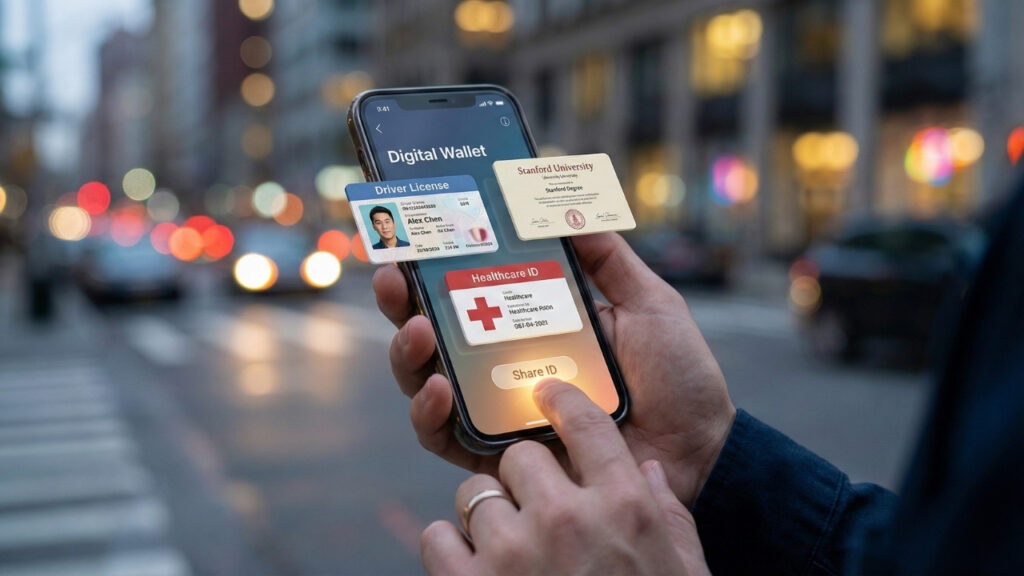
Decentralized Identifiers need a home, and that home is the Digital Identity Wallet. You likely already use a wallet for credit cards (like Apple Pay or Google Pay), but in 2026, these apps are evolving.
What is an Identity Wallet? Unlike a physical wallet that gets fat with plastic cards, a digital identity wallet stores encrypted data. It holds your ID, driver’s license, university degree, and even your gym membership.
Privacy First: Crucially, verification happens on your device. When a website asks, “Are you over 18?”, your wallet checks your ID and simply sends a “Yes” signal to the website. The website never sees your birth date.
🔥 Trend Alert: The Native Integration (Late 2026)
By late 2026, you won’t need to download obscure 3rd party apps to hold your ID.
Apple & Google: Both major operating systems are integrating Verifiable Credential (VC) support directly into the core OS.
The “Blue Tick” for Humans: Just as social media platforms have verification ticks, your smartphone will soon have a “Verified Human” badge that you can use to log in to social media, proving you aren’t a bot without giving up your privacy.
Conclusion: How to Get Ready
Summary: Decentralized Identifiers (DIDs) are not just “crypto-tech” for geeks; they are the fundamental upgrade to the internet’s safety layer. We are moving from an era of “logging in” (typing verified secrets) to “checking in” (proving who we are cryptographically). For the average person in the US and UK, this means less fraud, no more forgotten passwords, and total control over personal data.
What You Should Do Next:
Check Your Settings: Look at your phone’s “Wallet” app today. You may already have the option to add a Driver’s License (available in states like Arizona, Maryland, and Colorado).
Watch the Button: In the coming months, look for a new button next to “Log in with Google.” It will likely say “Verify with Digital ID” or “Log in with Wallet.” Try it—it’s safer, faster, and the future of the web.